Saturday, November 12, 2017
Reed College
By Meg Cotner
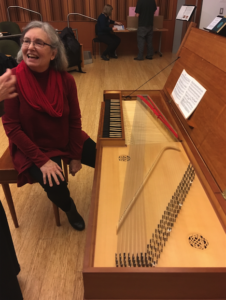
On November 12, 2017, an eager group of early keyboard devotees met at Reed College for an afternoon of immersion in the magic of the clavichord.
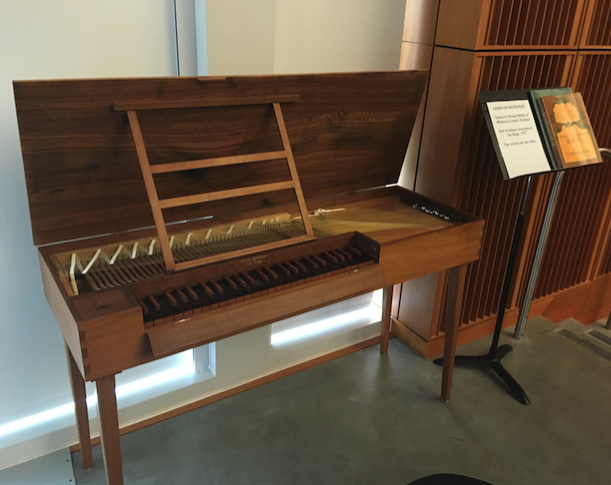
We began with a talk by distinguished harpsichord and clavichord builder, Paul Irvin, explaining the history and demonstrating the construction of the instrument. Many in the audience felt clear at last in understanding the meaning of fretted versus unfretted instruments from Paul’s presentation. We heard about the beginnings of the instrument in the Middle Ages, to the focus of the afternoon, which was the love of the 18th century Germans for the instrument. Listen to the Talk
Carol lei Breckenridge, a specialist in 18th century keyboard music and instruments, played a mesmerizing recital featuring music of the Bach family, including: JS Bach’s Capriccio on the Departure of his Most Beloved Brother, and the Chromatic Fantasy and Fugue in D Minor; Sonata in B-Flat Major and Fantasy in F-Sharp Minor by CPE Bach; and two Sonatas by JC Bach. Carol lei’s playing was superb in every detail and the large, five-octave clavichord provided by Paul Irvin was generous in its capacity for volume and nuance.
In addition to the music, Carol lei’s husband, Michael Herrick, a retired chef, writer, artist and poet, read a selection of 18th century German poetry written in praise of the clavichord. The poetry was unabashed in its emotional adoration of the instrument and helped us to understand the regard of musical people of that era for the clavichord as a vehicle for personal expression.
Listen to a recording of Carol lei playing the Fantasy of CPE Bach on her 1765 Friederici clavichord by Paul Irvin: Fantasy in F Sharp Minor
Carol lei also shared some of her research into the views of 18th century German composers about the cantabile quality of playing that the clavichord supports. Listen to the Talk
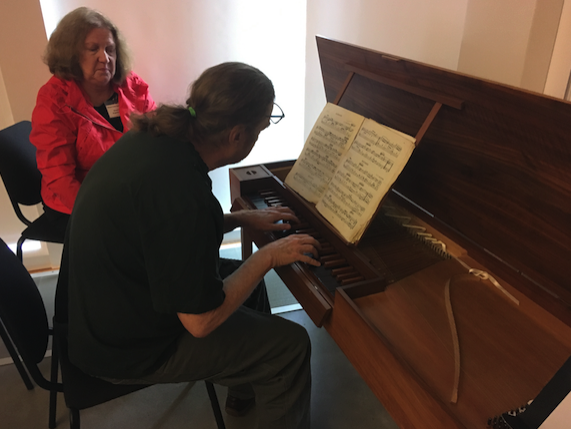
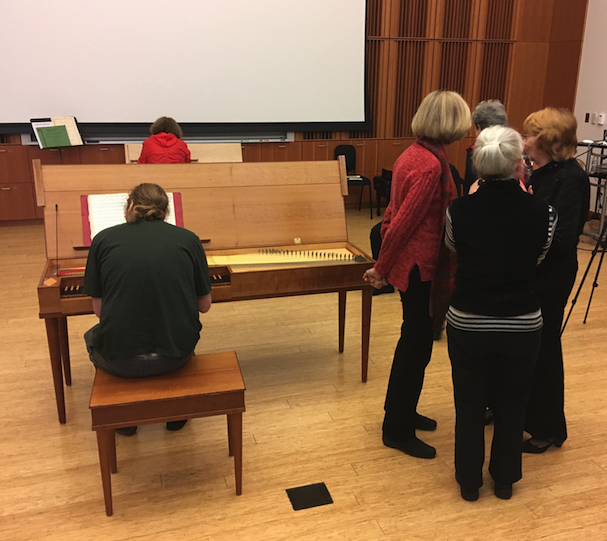
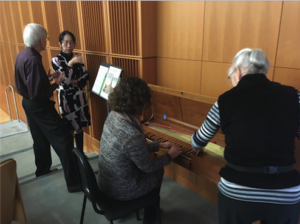
Between these events, attendees had the opportunity to play any of four clavichords set up in the recital room and to explore how the instrument works as well as to experiment with its expressive qualities. This was a valuable experience for any keyboardist to understand more fully how 18th century keyboard music was played and sounded in its own time.